


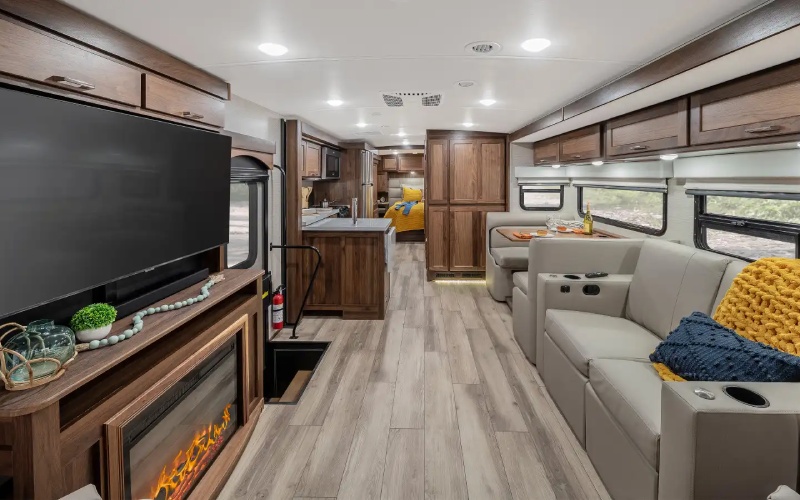
Winnebago Motor Homes - A Practical Floor Plan Fit Guide for Confident RV Travel around Madison, WI
Finding the right Winnebago floor plan is less about square footage and more about how each inch works for daily routines across Dane County—errands on the Beltline, a Saturday market run off Capitol Square, or a quick sprint to Devils Lake. Start with realities you cannot change: driveway length, garage height, tight condo lots around Shorewood Hills, and where you want to park on game-day weekends. Then get inside the coach and simulate life—prep a sandwich at the galley, convert the lounge to a bed, stow a week of groceries and a couple of helmets. That lived-in test tells you more than any spec sheet.
How to match layouts to Madison driving and parking
Madison roads demand agility in traffic and composure on breezy lakefront stretches. Class B vans handle the Kohl Center garage and neighborhood curbs with ease; look for Murphy-bed or twin-bed plans to keep a central aisle open without adding body length. Moving up, Class C bunkhouse floor plans pack family comfort and still fit many state park sites. Diesel Class C models add a relaxed highway ride for I-90 weekends. Class A layouts shine for longer trips—wide galleys and walk-around beds feel like home—but you will plan parking a bit more deliberately downtown. The trick is balancing where you will sleep with where you will park.
Inside the coach, break needs into zones. Sleeping comes first—do you want a fixed queen, flexible twins, bunks, or a convertible lounge? Murphy beds return floorspace for daytime cooking and work. Next, audit the bath: rear baths typically feel bigger; mid-baths split functions so two people can get ready at once; wet baths cram maximum function into van dimensions. For galleys, find a landing spot for a cutting board near the sink, confirm fridge swing direction, and check that trash has a permanent home. Finally, map storage: a rear gear garage protects messy kits, while tall interior cabinets keep soft goods handy and clean.
Power, climate, and quiet-camping smarts
Madison-area travelers often value peaceful camp mornings and generator-free nights. That is where lithium packs, robust inverters, and solar prep pay off. Consider air-conditioning strategies—can the coach run A/C briefly from batteries to bridge a hot stop? Is the alternator high-output to recharge during drives between Fitchburg and Sauk trails? For shoulder-season comfort, verify heated tanks and routed ducting, and ask how insulation behaves under wind. The goal is simple: quiet systems that work without babysitting. When those boxes are checked, off-grid spots north of Waunakee feel effortless.
Slide-outs can open lounges or bedrooms, but evaluate them like a seasoned owner. Inspect seals and underfloor mechanisms, then ask a crucial question: can you reach the bath and fridge with slides in while parked along Monroe Street for to-go food? If not, another plan might suit you better. Convertible lounges are fantastic for guests but should still allow foot traffic after lights out. And if you carry bikes or paddle gear, measure the path from the rear doors to storage—smoother loading equals happier mornings. Little things like shoe cubbies, towel racks near the shower, and coat hooks by the entry end daily clutter.
Test-drive routes that tell the truth
We encourage a drive that includes the Beltline’s on-ramps, a stretch of John Nolen Drive for crosswinds, and a neighborhood loop with a few tight turns. Listen for cabinet rattles, note mirror coverage on lane changes, and try a quick back-in to something the size of a driveway. If the driver can relax, the trip is already working. When you return, do a lights-out walk-through to confirm night paths from bed to bath and whether motion lighting behaves sensibly. A coach that handles well and flows well at midnight is a coach you will happily use.
Finally, think about ownership support. Does the service team explain maintenance in plain language? Are common parts—sealants, water pumps, slide components—readily available? Are accessory installs (bike racks, tow bars, satellite hardware) approached with a plan that respects your roof layout and storage plan? These details define how simple the next five years will be. At the end of your research, one layout will keep rising to the top—comfortable in motion, easy to park, and tuned to how you actually live and travel. That is when a thorough orientation and a follow-up shakedown checklist make all the difference.
When your plan fits, road days around the isthmus just flow—groceries slide into their bins, jackets land on dedicated hooks, and everyone knows where shoes live. That is the quiet power of a smart floor plan: less fiddling, more fun. Winnebago Motor Homes provides walk-throughs that mirror your routines and can outline options that balance livability, storage, and power needs while serving Rockford, Chicago, and Madison. Choose the layout that supports the life you want, then go make memories on the routes you already love.